Sunday, April 18, 2010

Tyler Durden: Fight Club


When I chose to include "Fight Club" and Tyler Durden in this Independent Study, I wanted to explore the idea of villainy of the self. Where a character, in this case the narrator, creates an alternate personality that becomes self destructive. Because of the constraints of society, the narrator believed that he wasn't capable of making a difference, of having certain qualities, so he created Tyler Durden. The narrator says, "I love everything about Tyler Durden, his courage and his smarts. His nerve. Tyler is funny and charming and forceful and independent, and men look up to him and expect him to change their world. Tyler is capable and free, and I am not" (174). In the movie, Brad Pitt as Tyler Durden tells Edward Norton, the narrator, that he looks the way the narrator wants to look, acts the way he wishes he could act, and even fucks the way he wishes to fuck. So why not just let Tyler take over? Why not be this entity that he created? Tyler is his hero at the beginning but his actions quickly spun out of control until the narrator realized this wasn't what he wanted to be doing and the only way to end it was to shoot himself.
It is precisely because Tyler Durden is the narrator's hero at the beginning of the novel that makes him such a great villain. Palehniuk's writing style slams us over the head with the dreariness of the narrator's situation. It's a very similar feeling to the beginning of "American Psycho," the suffocation of the superficial, trying to find perfection in material things, in Ikea magazines. So when the narrator says, "Deliver me, Tyler, from being perfect and complete" (46) we want it too. The change of tone in the narrator's voice also makes us go along with Tyler's ideas for awhile. "Maybe self improvement isn't the answer. Tyler never knew his father. Maybe self destruction is the answer" (49). And even though we see these guys beating each other to a pulp, just the change in their lives - the fact that they actually seem to be feeling something, makes us also hold Tyler up on this pedestal.
This idealism in such a nihilistic message sets us up for what is coming and we dread the direction the story begins to play out. But it isn't until the death of Bob that the realization of what the narrator has created and supported really hits home. And Tyler becomes something terrifying the narrator has to stop.
Marla Singer is an interesting topic point when it comes to comparing Tyler Durden in literature and film. In the movie, it seems like Tyler Durden doesn't care or really want Marla at all beyond sex. But Edward Norton, as the narrator, comes to really care for her. And when he basically tells Marla that he is not Tyler Durden, Tyler seems to have no qualms with just wanting to get rid of her because she knows too much. However, in the novel, it begins by saying in the first chapter, "I know all of this: the gun, the anarchy, the explosion is really about Marla Singer... We have sort of a triangle thing going here. I want Tyler. Tyler wants Marla. Marla wants me. I don't want Marla, and Tyler doesn't want me around, not anymore. This isn't about love as in caring. This is about property as in ownership. Without Marla, Tyler would have nothing" (14). This basically sets up the novel to revolve around the narrator and Tyler's relationships with Marla. While in the movie, although important, seems to not be the center of the story except at the beginning and then at the very end. In the movie the narrator says, "it has something to do with Marla Singer" not that Tyler hs nothing without her or that it IS about Marla. This makes Tyler's character in the novel more layered because total destruction of society isn't his only goal. If he wants to "own" Marla like "property" then, in a way, this goes against his anti-consumer message as well as the idea that no one is special.
The different endings say more about the narrator than Tyler Durden. In both, the narrator shoots himself and "kills" Tyler Durden but in the film, he talks to other Project Mayhem members and watches the explosions while holding hands with Marla. It almost seems like they will have a happy ending. But in the book, he is in a mental institution, where he refuses to "return" because people still whisper to him "We look forward to getting you back" (208). To me, that shows that the narrator is afraid of Tyler coming back.

Sunday, March 28, 2010

Patrick Bateman: The Psycho on screen and on the page


Patrick Bateman. He is arguable more infamous than Alex from "A Clockwork Orange" even though it is unclear whether his murders are real or all in his head. Why, then, does Patrick Bateman terrify us? My argument is that it's because on the outside he is everything society tells us we want to be: handsome, rich, successful at his job, fashionable, and is engaged to a beautiful woman that will give him even more social standing. But underneath his moisturized skin, Patrick Bateman is the exact opposite. He is a racist, misogynist, necrophiliac, rapist, murderer, and cannibal. He is the ultimate satire of greedy yuppie culture that was particular apparent in the 80's. But more than that, Patrick Bateman is frightening because whether or not he actually committed these acts, he could be the handsome man next you on the subway thinking these thoughts.
In most children stories, and especially in Disney Films, the villain has physical attributes of ugliness or a color palate of darker tones to show their role. For example, Scar is darker than the other lions in "The Lion King" and has a scar, while Simba and Mufasa have no wounds and are of a more golden color. Although the Evil Stepmother is beautiful at the beginning she still wears dark robes and turns into an old hag when she tries to kill Snow White herself. Ursala always appeared to be unattractive in "The Little Mermaid." Jafar, as well, had a large nose, mustache, and dark robes and then later transforms into a giant snake and then demon-like Genie. My point is that they are clearly identifiable. But Patrick Bateman is anything but that. First of all, he is attractive. In multiple chapters he lays out for us his hygiene routine in great detail. For example, on 106, we get to see the contrast between the attractive surface and the serious problems hiding underneath: "Before leaving my office for the meeting I take two Vallium, wash them down with a Perrier and then use a scruffing cleanser on my face with premoistened cotton balls, afterwards applying a moisturizer. I'm wearing a wool tweed suit and striped cotton shirt, both by Yves Saint Laurent, and a silk tie by Armani and new black cap-toed shoes by Ferragamo. I Plax then brush my teeth and when I blow my nose, thick, ropy strings of blood and snot stain my forty-five-dollar handkerchief from Hermes that, unfortunately, wasn't a gift. But I've been drinking close to twenty liters of Evian water a day and going to the tanning salon regularly and one night of binging hasn't affected my skin's smoothness or color tone. My complexion is still excellent. Three drops of Visine clear the eyes. An ice pack tightens the skin. All it comes down to is: I feel like shit but look great."
But despite all of this hard work, the extensive workout routines, the many products for the skin and hair, Patrick Bateman has less of a name than his clothes do. All of the Wall Street characters in this novel can name almost every piece of clothing that the other characters are wearing but they cannot remember the names of their colleagues. Surface is all that people put importance into and yet no one seems to have their own identity, not even the narrator of the book. Example: "Owen has mistaken me for Marcus Halberstam (even though Marcus is dating Cecelia Wagner) but for some reason it doesn's matter and it seems a logical faux pas since Marcus works at P&P also, in fact does the same exact thing I do, and he also has a penchant for Valentino suits and clear prescription glasses and we share the same barber at the same place, the Pierre Hotel, so it seems understandable; it doesnt irk me" (Ellis, 89).
When the only thing that seems of value becomes meaningless we begin to feel the hopelessness Patrick Bateman feels. The movie, and Christian Bale's performance, does a great job of hitting all of the surface points - the business card scene, naming the designer clothes, the hygiene scene is particularly on key. The credits are even a throw back to all of the ridiculous menu items named in the novel. But what it misses is the suffocation that the reader really begins to feel along with Bateman in the first hundred pages or so of the novel. Up until that point nothing graphically violent is mentioned. It is just a grinding of these surface details, again and again and again. And when Bateman does start saying violent things, then confessing his crimes, and no one listens or just thinks he is joking around, it becomes even more suffocating. The movie, on the other hand, goes straight into Bateman yelling at a waitress, "You're a fucking ugly bitch. I want to stab you to death, and then play around with your blood." The pacing of the movie and the book is different. Patrick Bateman's psychological deterioration is linear in the novel, really taking off after the first 250 pages when he begins to start saying things like, "‘You know, guys, it’s not beyond my capacity to drive a lead pipe repeatedly into a girl’s vagina,’ I tell Van Patten and McDermott, then add, after a silence I mistake for shock, finally on their parts an acute perception of my cruelty, ‘but compassionately.’ ‘We all know about your lead pipe, Bateman,’ McDermott says. ‘Stop bragging’" (Ellis, 325). While the movie begins with that outrageous quote then settles back down into his hygiene routine and then speeds back up again.
But I would say that so far, Patrick Bateman is the character that has been translated on screen most successfully. The voice overs and having him be the star of every scene makes us just as conflicted at the end of the movie as we are in the novel about whether he actually committed these heinous acts. Christian Bale's performance is really incredible. He was able to bring to life this terrifying character but also portray his suffering in this world where every door "IS NOT AN EXIT” (Ellis, 399).

Monday, February 22, 2010

Film vs. Literature: Alex from "A Clockwork Orange"


If you look up "Top Villain" lists, whether it be film or literature, Alex will most like be there and, in many cases, one of the top spots. My personal interest in Alex is his transition from victimizer to victim, as well as the question of whether a villain can be "cured" of his violent thoughts and tendencies. In this post, I will also be discussing the differences between Alex in the mediums of literature and film. Stanely Kubrick uses the American edition of the novel, which omits the last chapter of the original story. This chapter not only sets a different tone for the entire novel but also changes view of the audiences on what Alex will do and be like in the future.

Alex from the Novel
We immediately get a sense of who Alex is just from his language - the slang, Nadsat. We are immediately distanced from him, we know he is different from us. It also makes me less aware of just what Alex and his droogs were doing until I got the hang of the slang. For example, I had to look up that "tolchock"(Burgess, 10) meant "to hit."
The first thing I noticed about Alex and his brutality was that he was very judgmental of those around him and how they committed their own acts of violence. His rivalry with Dim and Georgie really showed how he thought he was different from those around him. Although they all indulged in the same gruesome acts, Alex compared his acts of violence to music and art, as if violence was another genre, his genre, of the arts. One of the first times we see this comparison is when Alex is describing the rape of the writer's wife, "So he did the strong-man on the devotchka, who was still creech creech creeching away in very horrorshow four-in-a-bar, locking her rookers from the back, while I ripped away at this and that and the other, the others going haw haw haw still, and real good horrorshow groodies they were that then exhibited their pink glazzies, O my brothers, while I untrussed and got ready for the plunge" (Burgess, 27). Alex is not concerned with what his actions do to other people, he does not associate the consequences of his actions to the actions itself. Even when he finds out what happens to some of his victims later, it is as if he doesn't realize it was because of him that they died. What he is concerned about is the pleasure he receives from violence and music and how he goes about committing the acts. To Alex, Dim is less than him, even though they commit many of the same acts, because he is "vulgar"(Burgess, 32) and stupid. On the other hand, Georgie relies too much on his intellect instead of impulse, according to Alex. In the first part of Part One, Alex's natural instincts as a leader garner him success. But, it is this impulse over intellect reasoning that gets him arrested when Dim and Georgie betray him.

Alex is most fearsome in part one. In the small pong of his fellow droogs, he has the power. And he uses that power to commit very heinous crimes without regret or apology. He thinks he above the law, better than the law. He is naive, and we see him for what he is, a bored child, when he is arrested and becomes the victim of the State. Each part begins with the same question, "What's it going to be then, eh?" But each time, the question has a different tone. The first part is full of confidence, there is an excitement for what the night will bring. The second part, when Alex goes to the State Jail, it is more like "what are you going to do, now?" a more desperate feeling. And indeed, Alex has to fight off daily beatings not only from his fellow inmates but also the prison guards. Part Two and Three bring to the forefront the battle between the current government and political dissidents. Alex becomes an individual caught up between the two sides, who both want to use him as a pawn and, if need be, sacrifice him for their own ideas and philosophies. Neither is really concerned with morality but achieving their own ends.

Ludovico's Technique is interesting to consider when looking at villainy, for it did stop Alex from committing violence and thinking violent thoughts but only because it caused him physical pain not because he thought it was morally wrong. He could also no longer listen to music since he associated it with his violence. This just takes away his free will, it doesn't "cure" him of his nature. The question of what morality wants and "What God wants" seem to different than what the government wants. To the government, as long as a criminal is kept from doing bad things it doesn't matter whether he chooses to do so out of free will. Although, I would argue that Alex is a naive child throughout most, if not all, the novel, he does raise a point when he asks, "hey don’t go into the cause of goodness, so why of the other shop?" (Burgess, 44) It is true that as a society we believe that it is natural to be good and those who are bad have somehow strayed off the path. But Alex asks if that is actually the case. Alex is never turned "good" by the Ludovico Technique. He is only brainwashed and humiliated. But he doesn't feel regret over his victims, only nausea, and there is a difference.

Although he is the narrator and protagonist of the novel and film, it is difficult for me to feel bad for Alex when he becomes a pawn of first the State and then F. Alexander. It did bring to light that he is, firstly, a child, but not enough for me to like him. This might be because he doesn't feel regret for his actions. This doesn't mean he fails as a villain, he certainly doesn't. In many cases, it makes a villain more successful if you feel for them even at least once during the movie or book, since it adds a bit of humanity to the character and makes them more complex. And many do with Alex, I just didn't. I think Alex is successful because he is a perfect example that anyone, even a child, can be a villain.

The novel ends with Alex, no longer brain washed, running into Pete, an old droog who is now settled and married. Alex decides that he has grown passed the violence and that he also wants a son. He comes to the conclusion that violence was a product of his youth. This chapter was withheld from the American version because the American Publisher felt an American audience wouldn't find such a turnaround believable. I, myself, don't believe it, but I do not think it should have been taken out of the American edition. It adds a layer of manipulation to the character. He hasn't decided violence is bad, he doesn't think of his victims, he just got bored of it.


Alex from the Film

Alex from the film is less brash than the Alex in the book. He is more sly with those around him. Because we don't get the full narration like in the book, the idea that Alex views his violence as a work of art is less clear. And because he looks much older than 15, I viewed him as an adult not as a child. Thankfully, the victims of rape in the film are also older than those in the novel. The same slang is there, but because we can clearly see what Alex and his fellow droogs are doing, we are not distanced from the violence. Malcom McDowell is frightening. His stare really pierces us to the heart... but because he does look much older, when he becomes the pawn, his status as a smart villain decreases and just seems naive and maybe even a bit stupid.
Because the film ends without the optimistic final chapter, it seems like Alex has always and will always be out for himself - no argument about it. I think the only time I felt bad for Alex in the film, was when he came home to his parents, who have basically replaced him with Joe, who is renting Alex's old room. I think this scene had a more emotionally punch in the movie, for me, than in the book because Joe looks to be about the same age as Alex in the movie and is older in the book. It was the one time I saw him as a child.

Thursday, February 18, 2010

Oil! and There Will Be Blood


I should begin by saying I chose Oil! because I had seen There Will Be Blood and I thought that the character of Daniel Plainview would be fantastic as the start of the "villain as the central character in the story" run in this independent study (ending with American Psycho and Patrick Bateman). So I was very surprised when I started reading Oil! and realized that "Dad" (James Arnold Ross, the character Daniel Plainview is based off of in the movie) is not only not the central character of the novel but also is not the main villain. I would argue that the main "villain" and antagonist of Oil! is not one person but Capitalism and the exploitation of laborers.

Oil! is very much the story of Bunny, son of James Arnold Ross. He is the narrator and the novel follows his life from his early teens until a little after his father's death. The novel is more of a battle between ideologies than characters. We see this battle through the eyes of a privileged, upper class son of an oil company owner who becomes friends with Paul Watkins, who becomes the main advocate in the novel for socialism. WWI is a very large factor in the book, causing Paul to go to Russia and discover socialist ideas. Ross ends up having to run to Canada from the government and through Bunny's eyes is a victim, himself, in a way.

Because of these factors, it is difficult to compare the two villains because they are not the same. Daniel Plainview is based off of Ross but is definitely not Ross. Bunny and his life is extremely different from H.W. Plainview. For starters, Bunny is the actual son of Ross, while H.W. is "adopted" by Plainview and only finds this out at the end of the movie. The movie is not the story of H.W., who is really a victim of Plainview. Although they both begin to question their father's work tactics, H.W. loses his hearing and is disowned by Plainview, while Bunny only misses out on a large part of his inheritance.


There Will Be Blood is really a character study of Plainview. The conflict is between himself, his ambition and Eli Sunday along with the rest of the town. WWI is not a factor in the film and Plainview has not made his millions until the end of the film. Plainview seems to believe that the world (Eli, the town, other oil companies) is out to destroy him. In the end, he has the wealth he wanted throughout the movie but destroys himself through alcoholism and isolation.


So what makes Plainview such a great villain? Why did this character push me to read Oil! even though it ended up not being about him? I think it is because, like so many villains, they expose a darkness in ourselves. With Plainview, it is the danger of ambition and desire for wealth and success. How far will we go to achieve our goals? For Plainview, there is nothing he won't sacrifice for success and wealth and that is what makes him interesting. He is what many fear their will become. I can't really talk about Daniel Plainview, without mentioning the spectacular performance of Daniel Day-Lewis. Another reason why Plainview is so captivating as a character is because Day-Lewis keeps you at the edge of your seat. He adds a dangerous undertone to the oil business man that culminates in a final, all out murderous act at the end.

Tuesday, December 8, 2009

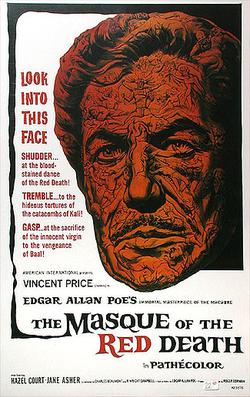
The Masque of the Red Death 1964 Film


-The film is far different from the short story. Although the basic idea is the same - A disease is killing off a Prince's population, while he enjoys a life of luxury secluded in his castle - Prince Prospero is a different character. In the short story, Prospero is described as mad but he and his guests are indifferent to the outside world. However, the Prospero in the movie takes pleasure in making the lives of those in and outside the castle miserable.

-In the film, Prospero worships Satan and brings in a village girl to try to corrupt her belief in God and convert her. This is not in the short story at all. The movie Prospero believes that Satan will protect him against the Red Death. His mistress, Juliana, also believed that Satan had spared her during her own sacrifice to become his wife. She was pecked to death by a crow.

-I prefer the Prospero in the short story even though he doesn't have as much detail, back story, or motive. Poe's Prospero is a coward with a false sense of arrogance. He fears the Red Death figure as soon as he sees him then becomes angry because he truly believed he had cheated death. The movie Prospero follows the figure, angry at first because someone defied his orders to not wear red, and then honors him because he thinks he is a messenger of Satan, his master. Then there is the relationship with Francesca, which also isn't in the short story. He wants to corrupt her but then asks for her to be spared. This is out of character to all of his actions in the film thus far and just adds another unnecessary variable to the story.

-One thing that remains true is that the Red Death is not portrayed as the main villain of the story. He is simply a part of the universe that cannot be stopped or controlled. The meeting with "Yellow Death," "Black Death," and "White Death" at the end seemed a little over the top and also unnecessary.

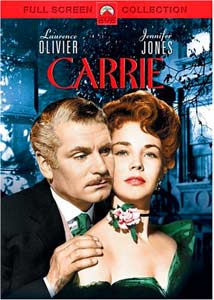
Carrie


-The movie shows Carrie in a MUCH more sympathetic life and her relationship with Hurstwood is more romanticized.

-Hurstwood's wife is portrayed as more than despicable and so the audience feels sympathy for him and understands his actions more.

-Even in poverty, the two are madly in love. What tears the two apart is not money, but that Hurstwood's wife reappears in their lives informs Carrie that they are still married and the stress causes Carrie to have a miscarriage. Carrie leaves Hurstwood to join the theater, but not because she resents him or doesn't love him anymore.

-Probably the biggest change in character is when Carrie and Hurstwood have their final meeting. She wants to take him in and share her wealth with him - not just give him nine dollars and send him on his way. It is Hurstwood who leaves her because he does not want to bring her down.

Sister Carrie: Carrie and Hurstwood


-Neither Carrie is not a usual Villain. She certainly isn't an outright villains like the other books I have read but I think she is a good example of a more every day villain.

-In the beginning, it would see she was the victim. Drouet feels sympathy for her low-income situation but he also wants to use his money as a way to sleep with her. But it is Carrie's own obsession with money and material items that lets Drouet do this. In return for clothes and nights out on the town, Carrie agrees to live with him without getting married. But Carrie is far from innocent. As soon as she sees Drouet next to Hurstwood, her attention begins to transfer to the more fashionable and wealthier man.

-Carrie dances between the two men, taking all that they give to her. She bathes in Hurstwood's love and the prospect of a good marriage, but accepts material gifts and acting roles from Drouet. Drouet was not the only one using Carrie, they were using each other. As soon as she found someone who she thought she could marry and bring her into even greater luxury, she leaves him.

-Carrie is so caught up in her own wants, that she does not realize the lengths in which Hurstwood has gone to runaway with her. After years of loyal service, he steals ten thousand dollars from work. Not that Hurstwood is completely innocent here. On the contrary, he lied to Carrie to get her to runaway with him, didnt tell her he stole the money, and married her without divorcing his wife. However, these are not the reasons why their relationship begins to fall apart - it is the lack of money.

-Once Carrie becomes friends with her neighbor, Mrs. Vance, she once again has a taste of the upperclass in New York, which is on an even higher scale than Chicago. Carrie begins to become dissatisfied again. When Hurstwood loses his job, stops dressing well, and puts a cut off on Carrie's spending, things begin to go very sour. It was at this point in the book that I began to wonder if Carrie had ever loved Hurstwood in the first place or if it is as I have said in this blog - it was only his wealth and status in Chicago's society that fascinated her.

-They begin to resent each other, until finally Carrie finds work on her own as an actress under the name, "Carrie Madenda," which Drouet had given her. Carrie ends up leaving Hurstwood with 20 dollars and note to live with Lola. Free of Hurstwood, Carrie's career begins to take off. After becoming successful she encounters both Drouet and Hurstwood the same night. She feels pity for Hurstwood and gives him money, but does not seem to take any responsibility she may have had in his fall. Hurstwood ends up killing himself, Carrie remains successful but unhappy. She does not seek out information about him and dos not know that he has died.